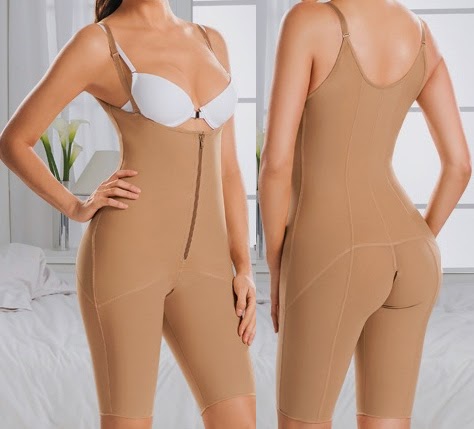
Compression Garments (Pressure Garments)

Mohammad Zain Ul Abideen
B. Sc. in Textile Engineering, Pakistan.
Cell: +92-321-8894390
E-mail: davilzain@yahoo.com
1. Definition of Compression Garments:
Compression garments also known as pressure garments. Compression garments are pieces of clothing such as socks, pantyhose, sleeves, etc., that provide support that is especially useful for people who have to stand for long periods, or people with poor circulation. Compression garments are used in diseases.
 |
| Compression garments |
2. Introduction:
The use of compression garments plays a very important role with in the management of lymphoedema and it is often called the ‘mainstay of treatment’. Although it is mainly used in long term management especially after a course of intensive treatment (including Skin care, Exercise, Manual lymphatic drainage (MLD) and the application of Multi layer lymphoedema bandaging (MLLB)).It may also be used to control early signs of swelling, thereby minimising future complications. Compression garments include sleeves, gloves, stockings, tights, toe gloves and a variety of specially fitted garments for individual needs.
The use of compression garments plays a very important role with in the management of lymphoedema and it is often called the ‘mainstay of treatment’. Although it is mainly used in long term management especially after a course of intensive treatment (including Skin care, Exercise, Manual lymphatic drainage (MLD) and the application of Multi layer lymphoedema bandaging (MLLB)).It may also be used to control early signs of swelling, thereby minimising future complications. Compression garments include sleeves, gloves, stockings, tights, toe gloves and a variety of specially fitted garments for individual needs.
3. History of compression garments:
Compression garments are started being used in human medicine around 400 BC. About half a century ago doctors started using another form of compression garment known as graduated compression stockings. These stockings are used routinely through out hospitals all around the world for post operative surgeries and by air travelers trying to avoid DVT’s (Deep vein thrombosis).In 1970 pressure garments have been used to exert pressure over human body for the treatment of scars caused by burns and post operative conditions. Their use has now got extended to the rapeutic applications for management of venous and lymphatic problems, bone and muscle injury, oedema sensitivity of skin in the affected area and comfact characteristics of these fabric play a critical role in patient compliance and healing, transport of heat, vapour and moisture from the body determine the comfort offered by a garment.
Compression garments are started being used in human medicine around 400 BC. About half a century ago doctors started using another form of compression garment known as graduated compression stockings. These stockings are used routinely through out hospitals all around the world for post operative surgeries and by air travelers trying to avoid DVT’s (Deep vein thrombosis).In 1970 pressure garments have been used to exert pressure over human body for the treatment of scars caused by burns and post operative conditions. Their use has now got extended to the rapeutic applications for management of venous and lymphatic problems, bone and muscle injury, oedema sensitivity of skin in the affected area and comfact characteristics of these fabric play a critical role in patient compliance and healing, transport of heat, vapour and moisture from the body determine the comfort offered by a garment.
4. Material use for pressure garment:
Following material is need for the preparation of compression garments such as Spandex, Latex and nylon filament commonly.
4.1 Spandex:
Spandex is a synthetic fiber, known for its exceptional elasticity. It is a popular choice for athletic compression wear. A popular name brand is “Lycra”. It offers four way stretch is form fitting and whisks moisture away from the body. Spandex should be hand washed or machine washed on delicate cycle and air dried. Compression garments made from Spandex include surgical hose, support hose, unisuits, foundation garments and compression shorts.
Following material is need for the preparation of compression garments such as Spandex, Latex and nylon filament commonly.
4.1 Spandex:
Spandex is a synthetic fiber, known for its exceptional elasticity. It is a popular choice for athletic compression wear. A popular name brand is “Lycra”. It offers four way stretch is form fitting and whisks moisture away from the body. Spandex should be hand washed or machine washed on delicate cycle and air dried. Compression garments made from Spandex include surgical hose, support hose, unisuits, foundation garments and compression shorts.
4.2 Latex:
Natural latex used in compression garments is extracted from the sap found in rubber trees. Garments containing latex can supplement waste reduction by causing the compressed area to sweat and burn excess fatty tissue.
Natural latex used in compression garments is extracted from the sap found in rubber trees. Garments containing latex can supplement waste reduction by causing the compressed area to sweat and burn excess fatty tissue.
4.3 Nylon filament:
Instead of these two nylon 6,6 filament of 210 denier is use for loop formation.
Instead of these two nylon 6,6 filament of 210 denier is use for loop formation.